A product of TwinStance Solutions LLP · LLPIN: AAQ-0042 · Est. July 2019 · Cuttack, Odisha
🪖 Army Grade · Field Ready · Offline First

WYNTIQ for the
Indian Army

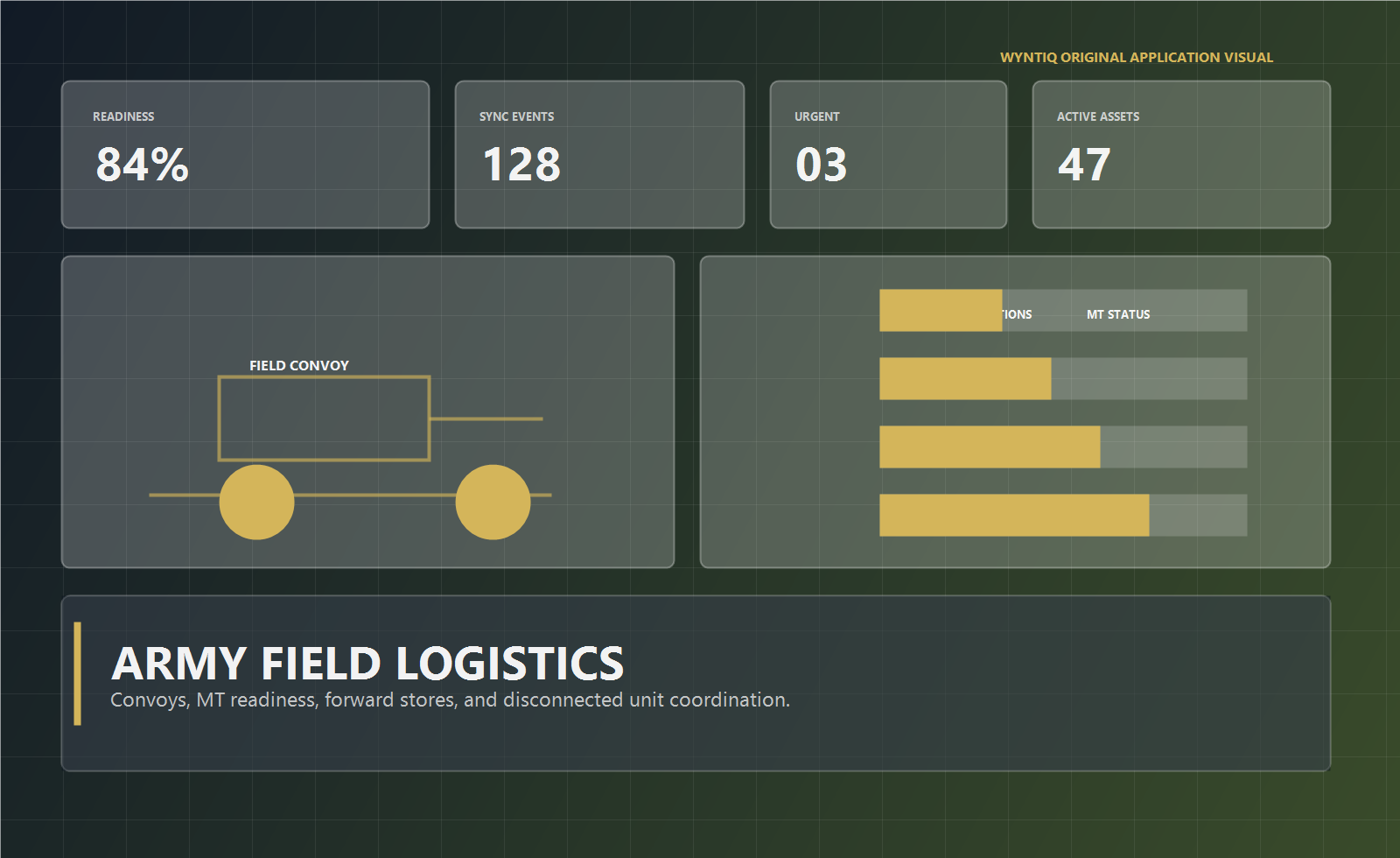
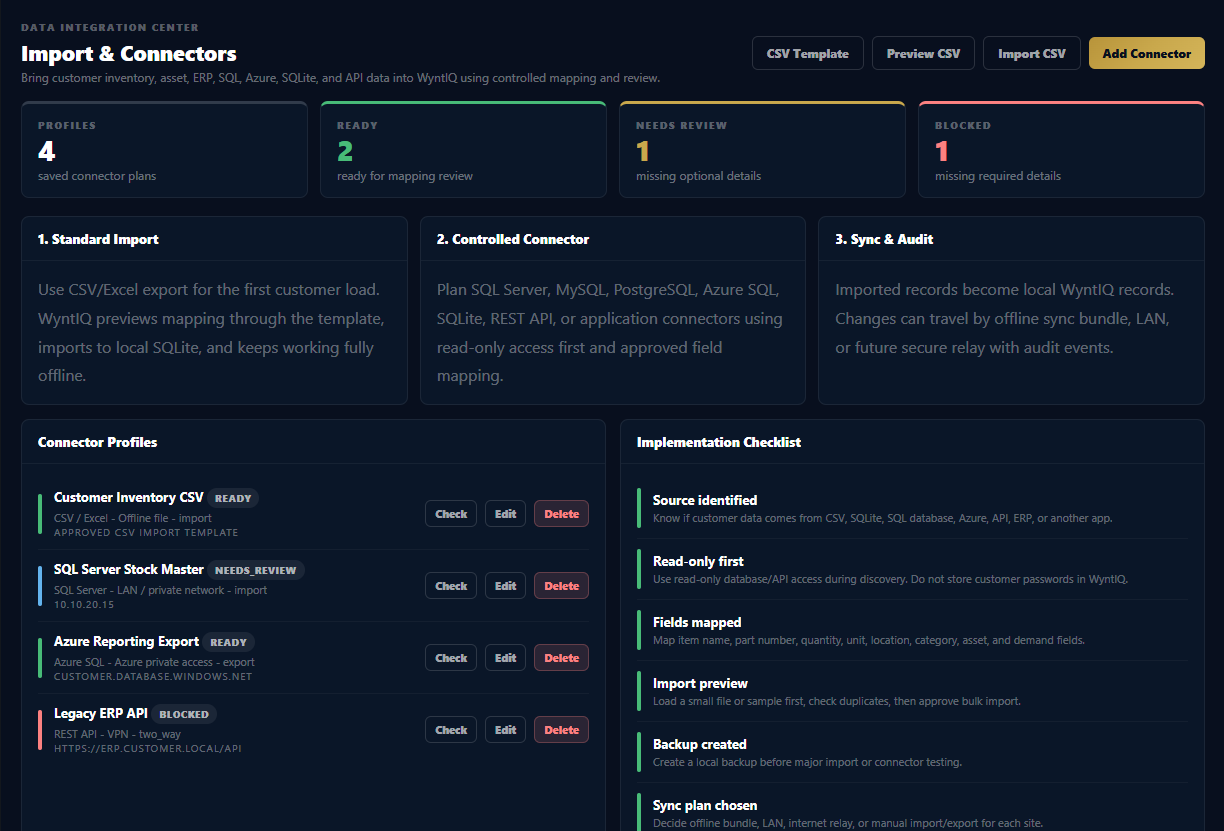
From Mechanical Transport sections to forward base field logistics — WYNTIQ digitises Indian Army supply chain management with true offline capability for Siachen, jungle operations, high-altitude deployments, and any environment where connectivity cannot be guaranteed. Built for how the Indian Army actually operates.

13
Army Corps
40+
Divisions
1.4M
Active Personnel
100%
Offline Capable
The Challenge

Logistics Is the Backbone of Every Army Operation

The Indian Army is one of the largest standing armies in the world, with approximately 1.4 million active personnel deployed across some of the world's most challenging terrain. From the frozen heights of the Siachen Glacier — the world's highest battlefield at 6,000 metres — to the dense jungles of the Northeast, to the scorching deserts of Rajasthan, to the coastal plains of the South, the Indian Army operates in a diversity of environments that no single logistics system has ever adequately addressed.

The fundamental challenge of Army logistics is not a shortage of commitment or effort — it is a shortage of real-time information. At any given moment, a Brigade Commander making operational decisions does not know with precision what supplies are available at each of his battalions, which vehicles are operational and which are in repair, how many days of rations each unit has, and what critical spare parts are pending at each MT section. He makes decisions based on periodic reports, verbal updates, and experience — all of which are imperfect substitutes for actual data.

This information gap has consequences. Units overstock supplies they think might run out, creating waste and unnecessary logistics burden. Units run out of supplies they assumed were available from higher echelons, creating operational vulnerabilities. Vehicles sit idle for days waiting for spare parts that are available at a nearby unit but invisible to the unit that needs them. Medical supplies expire in store because consumption patterns were not tracked and replenishment was not optimised.

The Indian Army's Integrated Materiel Management system covers the complete lifecycle of materiel — planning, procurement, receipt, storage, issue, disposal, and accounting. This is the right framework. What it needs is a digital implementation that works in the conditions where the Army operates — often without reliable internet connectivity, in organisations that span Corps, Division, Brigade, Battalion, and Company levels, with users who range from highly educated logistics officers to NCOs with basic digital literacy.

The MT Section Problem — A Daily Reality
Every Army unit of Battalion strength and above has a Mechanical Transport section responsible for the unit's vehicle fleet. When a vehicle develops a fault, the MT NCO raises a demand for the required spare part. This demand goes to the unit QM, then to the formation logistics unit, then potentially to an Army Service Corps depot. At each stage, information travels slowly — on paper, through runners, through phone calls that sometimes don't connect. Meanwhile the vehicle sits. The driver is idle. The unit's operational mobility is reduced. WYNTIQ makes this entire process digital, visible, and fast — cutting vehicle downtime from days to hours in most cases.

The challenge is further complicated by the operational security requirements that govern Army logistics. Data about supply holdings, vehicle availability, ammunition stocks, and equipment serviceability is sensitive military information. Any digital logistics system must operate within appropriate security frameworks, with proper access controls, without creating vulnerabilities through internet connectivity, and without dependence on commercial cloud infrastructure that may not meet defence security standards.

WYNTIQ addresses all of these challenges — real-time visibility across echelons, offline operation for field deployments, appropriate role-based access controls, and the ability to function without commercial internet infrastructure. It is designed to be deployed within the Army's existing IT security framework, with data stored on devices and synchronised through secure channels rather than passing through public cloud services.

❌ Problem: Vehicle Downtime
MT vehicles grounded for 3-7 days waiting for spare parts through manual demand channels. Unit operational mobility compromised. No visibility upstream on how many vehicles are available.
✅ WYNTIQ Solution
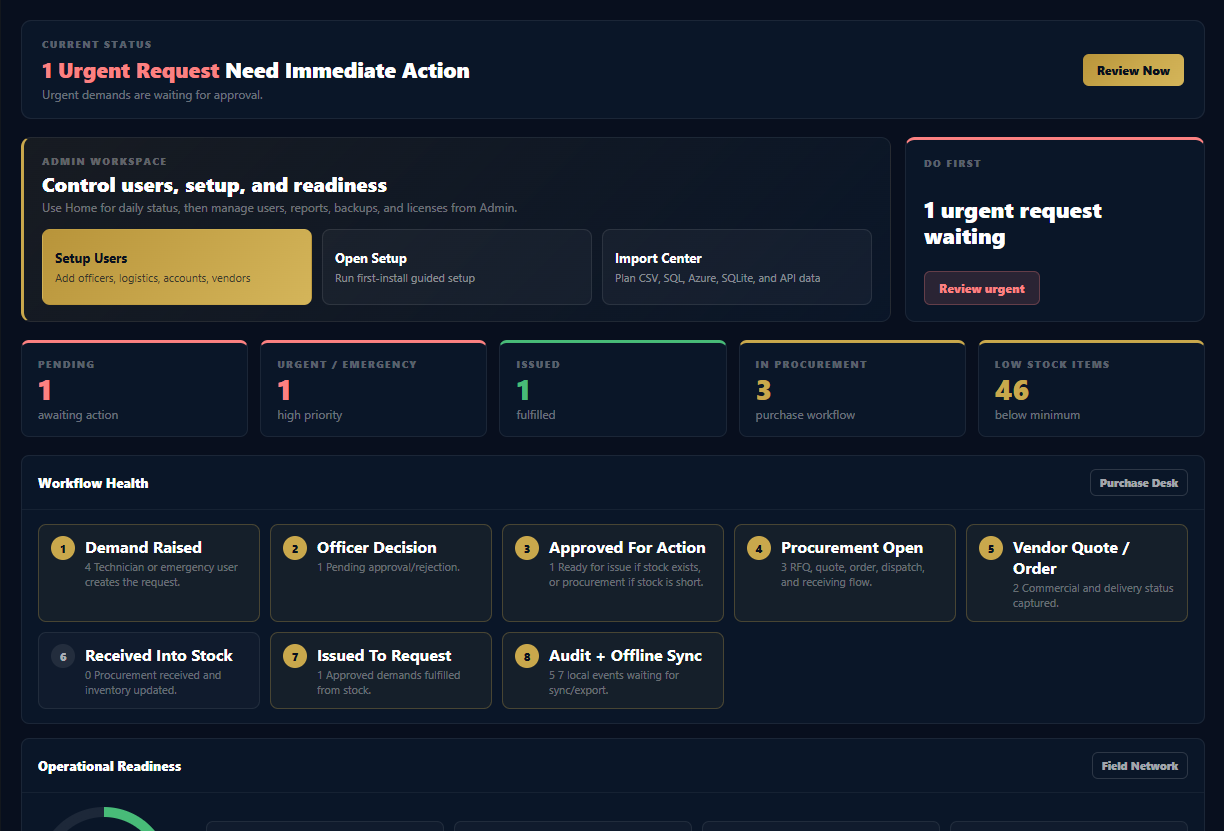
Digital demand raised in minutes. Cross-echelon inventory visible immediately. If part available at nearby unit — lateral transfer initiated instantly. Vehicle back in service in hours, not days.
❌ Problem: Field Disconnection
Forward positions have no internet. All digital systems become unavailable. Revert to paper. No real-time data for tactical decision-making. Higher command blind to forward supply status.
✅ WYNTIQ Solution
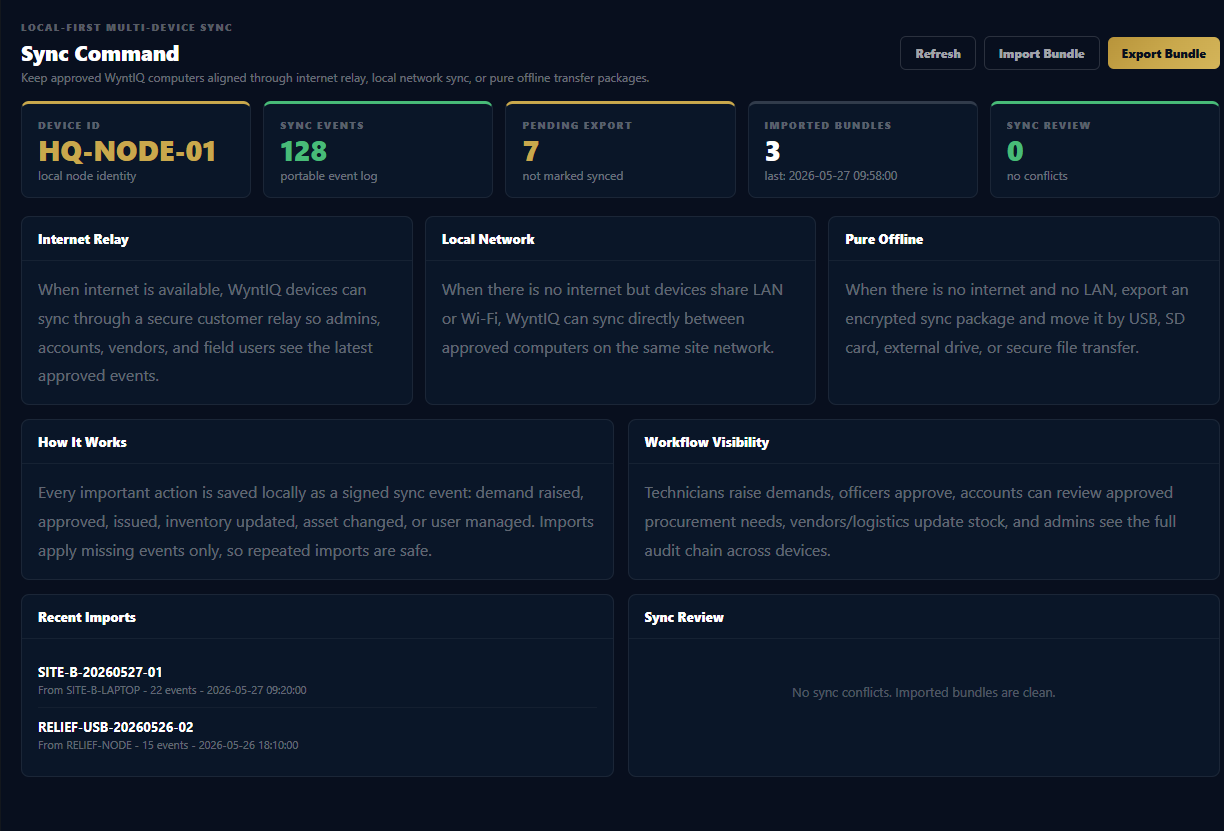
Full offline operation at every level. Devices sync over local mesh when in proximity. Data syncs to higher echelon when connectivity restored. No interruption to logistics management.
❌ Problem: No Cross-Unit Visibility
A battalion running short of a critical spare part has no way to know whether a neighbouring unit has it in surplus. The part must be formally requisitioned through channels, adding days of delay.
✅ WYNTIQ Solution
Formation-wide inventory visibility. Logistics officer can see holdings across all units in one screen. Lateral transfer request created, approved, and tracked digitally in minutes.
❌ Problem: Accountability Gaps
Stores issued without clear documentation trail. During audit, cannot determine who authorised which issues, when, and against what purpose. Paper records incomplete or missing.
✅ WYNTIQ Solution
Every issue linked to specific demand, specific work order, specific authorisation, specific receiver. Permanent audit trail. Every transaction traceable in seconds. Exportable as CSV for audit.
How It Works

Multi-Echelon Logistics Made Visible and Fast

The Indian Army's logistics hierarchy has multiple levels — Corps, Division, Brigade, Battalion, Company. Information must flow reliably up and down this hierarchy for effective logistics management. WYNTIQ creates a connected, real-time view across all levels while maintaining appropriate access controls at each echelon.

1
Unit Level — Demand Raised by MT NCO or Stores Staff
An MT NCO identifies a fault on a TATA Stallion truck — the brake cylinder has failed. He opens WYNTIQ on a ruggedised tablet that the unit uses for logistics — works offline even in the most remote deployment. He selects the vehicle registration number, enters the fault description, selects the spare part required from the catalogue or searches by part number, specifies quantity, and selects priority. The demand is created immediately and appears in the Unit QM's queue for review and approval.
2
Unit QM Reviews and Authorises
The Unit Quarter Master reviews the demand — seeing the vehicle registration, fault description, part required, and current inventory position for that part in the unit store. If the part is in unit store, it is issued directly and the vehicle goes back for repair. If not in store, the QM authorises the demand for forward transmission to the formation logistics unit. This authorisation is digital, timestamped, and permanent. The QM cannot authorise demands beyond his financial powers — the system enforces delegation of financial authority automatically.
3
Formation Logistics Unit Processes
The authorised demand appears in the formation logistics unit's queue — whether a Brigade Administrative Area or a Division level ASC unit. The logistics officer checks stock at formation level. If available, the item is despatched to the unit with full tracking. If not available, the logistics officer checks whether other units in the formation have the item in surplus — visible directly in WYNTIQ without any phone calls. If no lateral source is available, the demand is escalated to the Army Service Corps depot or the Corps logistics chain for procurement.
4
Accounts and Budget Control
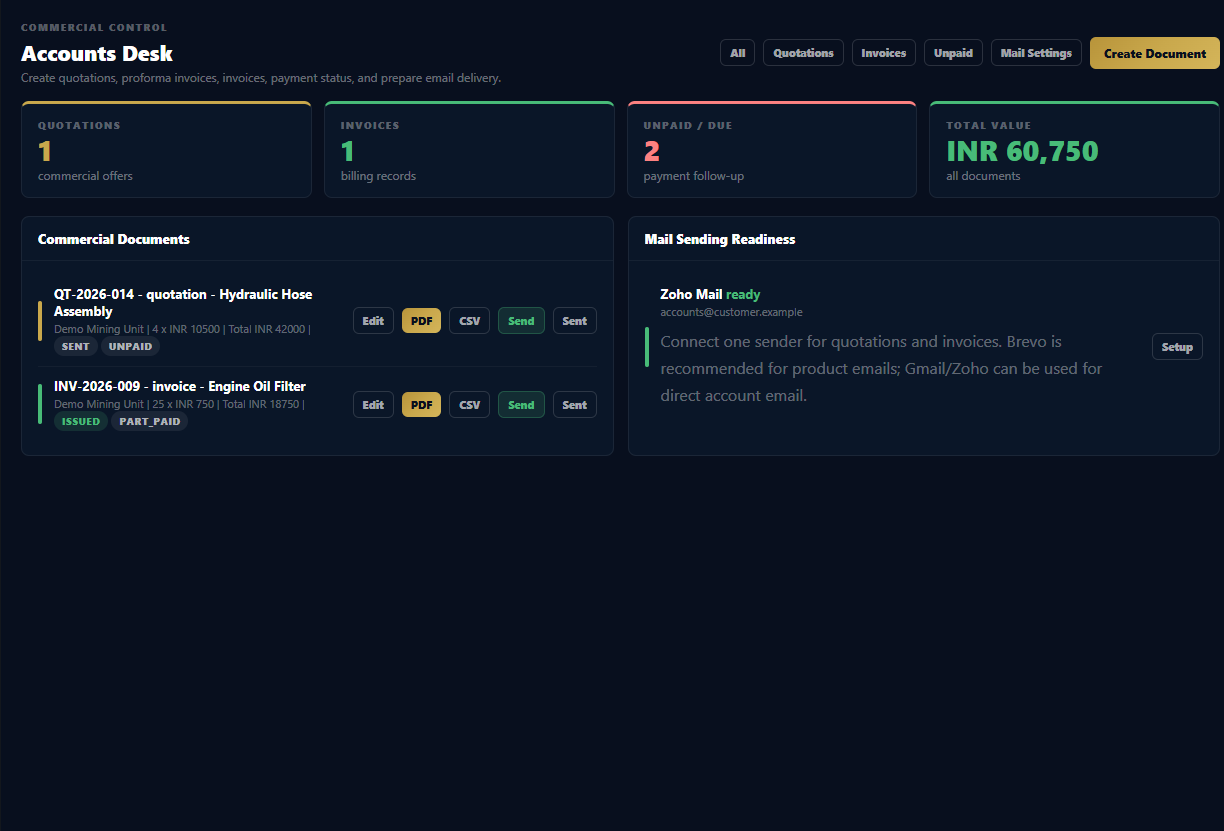
When procurement involves expenditure, the accounts section reviews and approves the financial commitment. WYNTIQ maintains running budget utilisation by account head, ensuring that approvals are made with full visibility of available funds. The system enforces the Delegation of Financial Powers applicable to each rank and role — no officer can approve expenditure beyond his authorised limits. Every financial commitment is recorded with the approving authority's details and the account head against which it is charged.
5
Delivery Tracked to Unit
When items are despatched from a depot or vendor, the despatch is recorded in WYNTIQ against the specific demand. The receiving unit can see that the items are in transit. On receipt, the stores staff records the receipt against the demand — the quantity received, the condition, the vehicle or courier used, and any discrepancies. Stock is automatically updated. The vehicle goes for repair with the now-available part. The entire transaction — from fault identification to vehicle repaired — is visible, tracked, and permanently recorded.
Key Capabilities

Built for Every Corner of Army Operations

🚛
MT Fleet Management
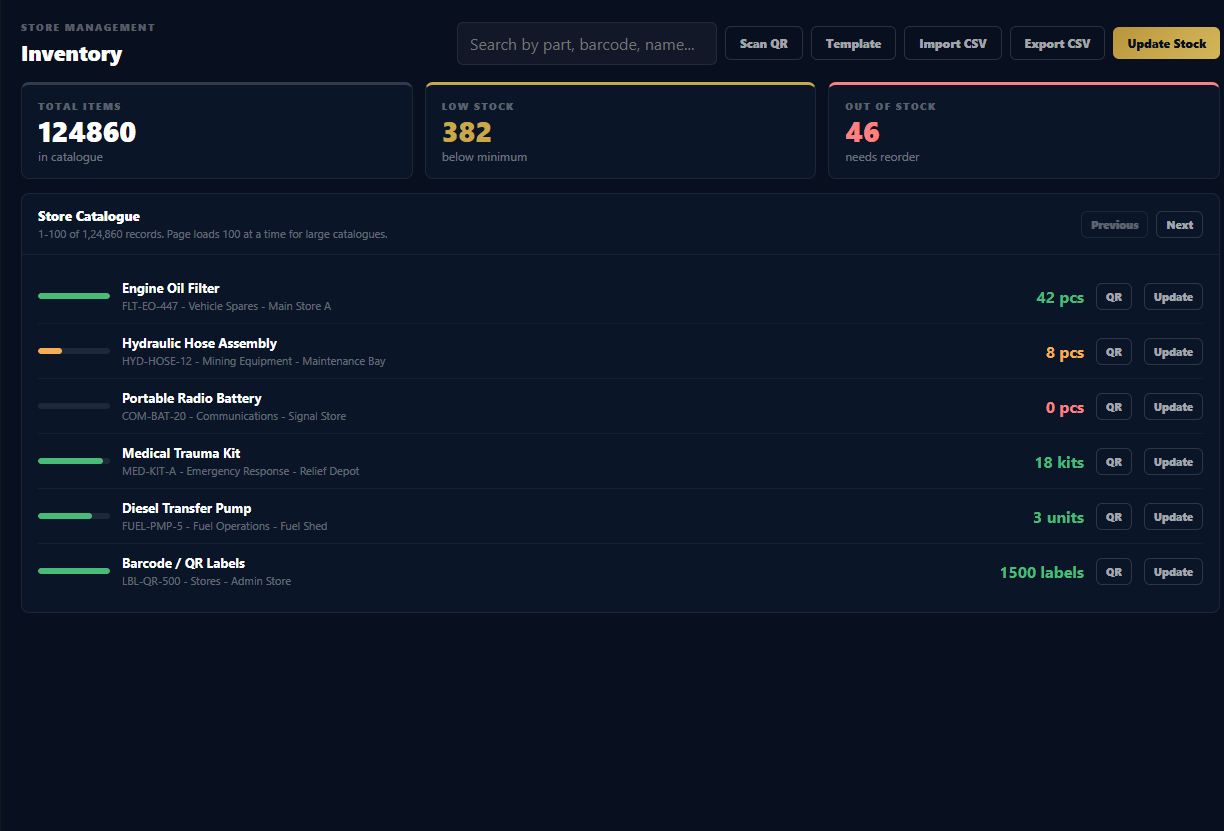
Complete digital record for every vehicle in the unit fleet — registration number, type, current status (operational, under repair, accident damaged, permanently unserviceable), maintenance history, and pending demands. The Commanding Officer and QM can see fleet availability at a glance. Historical maintenance records help identify vehicles with recurring problems that may need to be surveyed. Maintenance intervals are tracked and upcoming service due dates are flagged in advance.
🏕️
Field Operations Ready
Designed specifically for the most demanding field conditions — Siachen at -50°C, jungle operations in Manipur with 100% humidity, desert operations in Rajasthan at 50°C. The system works on ruggedised devices, functions fully offline, and uses minimal battery power. Data is compressed for efficient transmission when limited bandwidth is available. The interface is designed for use with gloves when necessary. No feature requires continuous connectivity.
📦
Multi-Echelon Supply Chain
WYNTIQ connects the complete Army logistics hierarchy — from Company level stores up through Battalion, Brigade, Division, Corps, and Army level logistics organisations. Each level can see the information relevant to its role without being overwhelmed by data from other levels. A Brigade Commander sees formation-level summary. A Unit QM sees unit-level detail. A Corps Logistics Staff Officer sees Corps-level aggregates. The right information at the right level for the right decision.
⚕️
Medical Supply Tracking
Critical medical supplies — blood products, life-saving drugs, surgical consumables, vaccines — tracked with expiry date monitoring and automatic alerts before expiry. Emergency override for immediate issue of critical medical supplies when lives are at stake, with full post-incident audit trail. Cold chain status monitored where sensors are available. Medical Officer has direct visibility of medical store holdings without going through the unit QM for routine queries.
🍱
Ration and Consumables
Daily ration authorisation tracked against actual troop strength. High-altitude ration scales, combat ration scales, and peacetime scales maintained separately and applied automatically based on deployment category. Consumables — fuel, lubricants, cleaning materials, stationery — tracked with automated replenishment triggers. Wastage identified and flagged for command attention. Discrepancies between authorized and actual consumption highlighted automatically.
📡
Mesh Network Capability
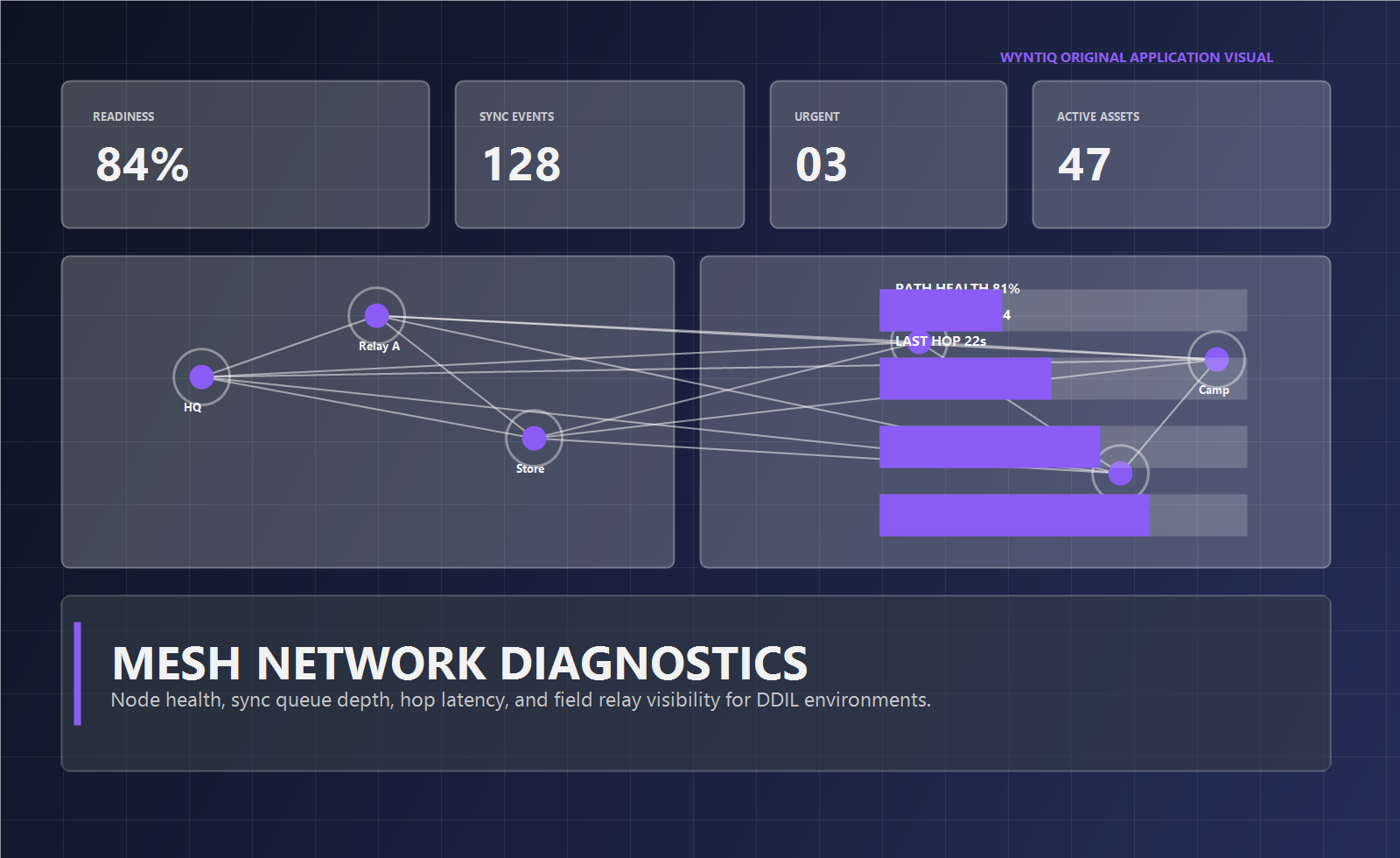
In DDIL (Denied, Disrupted, Intermittent, Limited) environments, WYNTIQ devices can synchronise with each other directly — without any central server. A device at Battalion HQ can synchronise with devices at Company locations when they come within range, using local WiFi or Bluetooth for short-range sync. This mesh capability means that even in a completely network-denied environment, information flows organically as people and vehicles move between positions.
Accountability and Transparency

Who Touched What. When. No Exceptions.

The Indian Army's logistics system has always valued accountability. The ledger-based store accounting system used by Army units is one of the most thorough in the world — every issue, every receipt, every survey documented in physical ledgers. But physical ledgers cannot be searched across units, cannot generate reports automatically, and cannot alert a commanding officer when something is going wrong until after the next scheduled ledger check.

WYNTIQ brings the same thorough accountability to the digital domain — with the critical addition of real-time visibility and instant searchability. Every transaction in WYNTIQ is linked to the individual who performed it, the device they used, the time it occurred, and the demand or work order it relates to. This information is stored permanently, cannot be altered after the fact, and is immediately searchable.

When a commanding officer wants to know why the unit's MT fleet serviceability fell below 70% last month, he can open WYNTIQ and immediately see every vehicle that was unserviceable, every demand that was raised for each vehicle, how long each demand took to progress through each stage, and exactly where delays occurred. Was it slow QM authorisation? Was it a part that took weeks to arrive from depot? Was it a part that was available at a neighbouring unit but not identified in time? WYNTIQ answers all these questions definitively, from the data it has recorded in real time.

For annual board of officers examining stores, for Courts of Inquiry into stores deficiencies, for command inspections and audit by the CAG — WYNTIQ provides a complete, authoritative, immediately accessible record that eliminates the weeks of manual ledger examination that currently precede every major stores audit. The audit report that currently takes three officers two weeks to compile can be generated in WYNTIQ in under a minute.

100%
Transactions Logged
0
Records Editable
CSV
Audit Export
<60s
Audit Report Generated
Predictive Intelligence

Anticipate Needs Before They Become Problems

The most effective Army logistics is predictive — knowing what will be needed before it is demanded, positioning supplies before they are needed, maintaining vehicles before they fail. WYNTIQ's predictive capabilities help units move from reactive to proactive logistics management.

WYNTIQ continuously monitors consumption rates and generates stock projections based on current holdings and historical consumption patterns. For each item in store, the system calculates the number of days the current stock will last at the current consumption rate. When this falls below a configurable threshold — say, 21 days for items with a 14-day procurement lead time — an alert is generated and the responsible officer is notified to initiate replenishment.

The system also analyses vehicle maintenance patterns to identify which vehicles are approaching major service intervals. A month before a scheduled 5,000-kilometre service, WYNTIQ will generate an alert that a particular vehicle is approaching its service interval, and will check whether the required service parts are in stock. If they are not, it will automatically recommend initiating procurement of the required parts so they are available when the vehicle comes in for service — eliminating the current common situation where a vehicle comes in for a scheduled service only to sit for another week waiting for parts to arrive.

During operational exercises and deployments, WYNTIQ can increase the sensitivity of its alerts automatically. When a unit is preparing for a major exercise, knowing that consumption rates will increase significantly, the system adjusts its projections and alerts accordingly — flagging potential shortfalls that would not have been flagged under normal peacetime consumption assumptions. This pre-exercise intelligence is particularly valuable for ensuring that units deploy with adequate spares holdings rather than discovering shortfalls only after the exercise has commenced.

Ready to See WYNTIQ in Action?

Request a private demonstration tailored for Army logistics requirements. We will walk through MT management, field operations, and multi-echelon supply chain scenarios.

Request Army Demo →